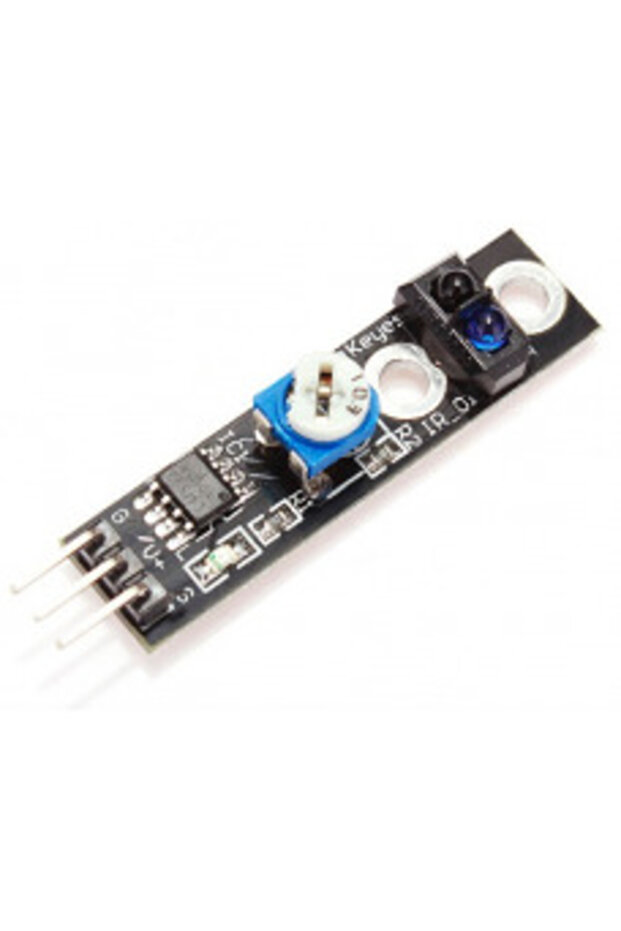
Generic 2C13 Tracking sensor module KY-033
27.25
AED
(incl. VAT)

Free shipping & Delivery
Estimated delivery:

Trendyol's commitments

Shopping security

Secure payment
Privacy protection
Safe delivery
Refund for lost and damaged packages
Coupon for late delivery

Free returns
Easy and free return in 15 days.
Highlighted features:
Generic 2C13 Tracking sensor module KY-033 features
Other Features
Adjustable sensitivity, Infrared technology, Built-in receiver and transmitter, 3-pin configuration
Instructions for Use/Warnings
The KY-033 Line Tracking Sensor detects black lines on white backgrounds or white lines on black backgrounds by sensing reflected IR energy. On a black surface, it gives a zero output signal; on a white surface, it gives a positive signal (digital one). Sensitivity can be adjusted using the knob (VR1). Pinout: G (Ground), V+ (+5V), S (Signal). A dark surface pulls the Signal pin HIGH, while a light surface pulls it LOW. For Arduino integration: Connect G to Arduino GND, V+ to Arduino +5V, and S to Arduino Digital Pin 8. An example Arduino sketch is provided to detect surfaces and control an LED. Test by applying power to Arduino, opening Serial Monitor, and observing output messages and LED status. Adjust sensitivity via VR1 as needed.
Product details
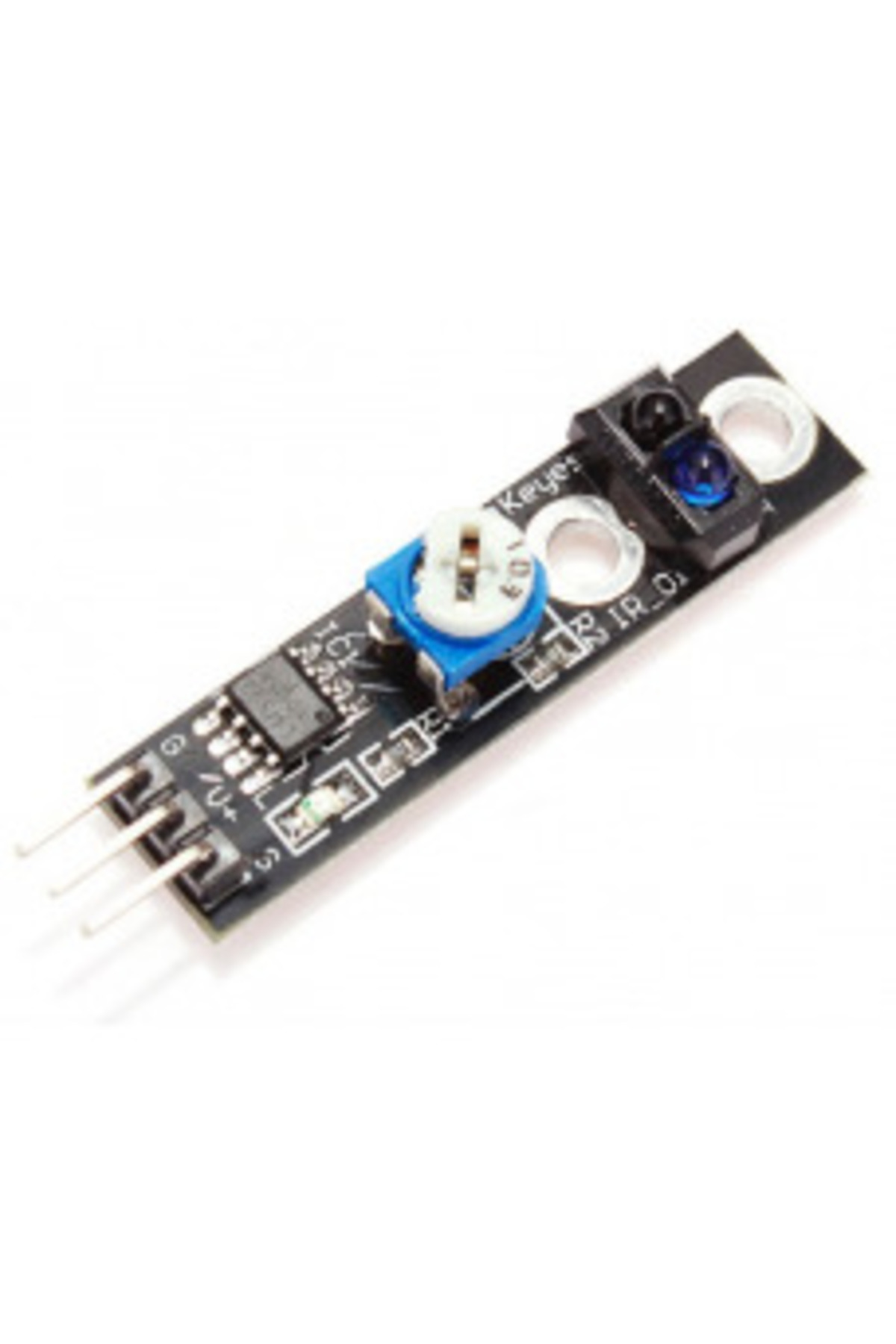
Generic 2C13 Tracking sensor module KY-033 features
Other Features
Adjustable sensitivity, Infrared technology, Built-in receiver and transmitter, 3-pin configuration
Instructions for Use/Warnings
The KY-033 Line Tracking Sensor detects black lines on white backgrounds or white lines on black backgrounds by sensing reflected IR energy. On a black surface, it gives a zero output signal; on a white surface, it gives a positive signal (digital one). Sensitivity can be adjusted using the knob (VR1). Pinout: G (Ground), V+ (+5V), S (Signal). A dark surface pulls the Signal pin HIGH, while a light surface pulls it LOW. For Arduino integration: Connect G to Arduino GND, V+ to Arduino +5V, and S to Arduino Digital Pin 8. An example Arduino sketch is provided to detect surfaces and control an LED. Test by applying power to Arduino, opening Serial Monitor, and observing output messages and LED status. Adjust sensitivity via VR1 as needed.
Safety information
Product safety information